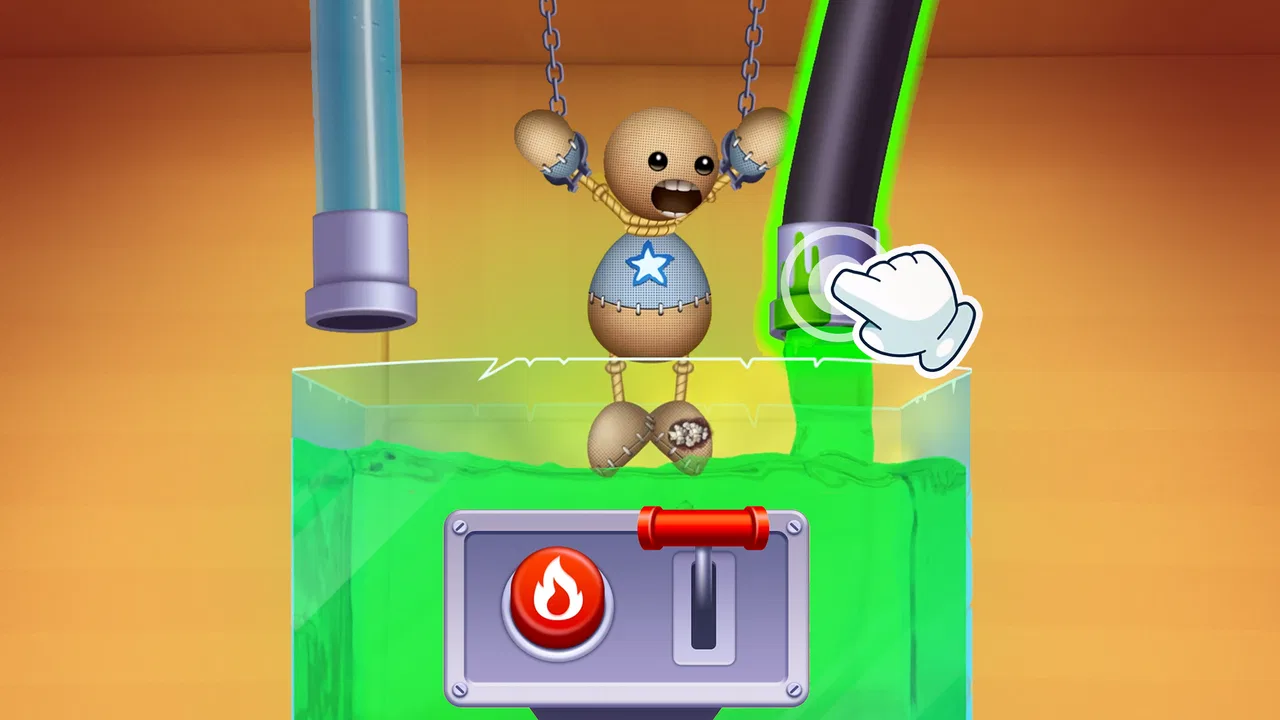
Kick the Buddy-Fun Action Game
- 4.1
- Rating
- 500.00M
- Installs
- Free
- Price

 Analysis by App-foxy
I first approached Kick the Buddy as a quick stress-relief game rather than a traditional action title. That expectation matters. This is a free game from Playgendary Limited in which the central appeal is interacting with a funny dummy through hits, punches, and throws. It is deliberately simple, exaggerated, and a little silly, making it easy to understand within moments.
After spending time with it, I found that its strongest quality is immediate accessibility. There is no complicated story to learn before the action begins, and the basic idea is clear enough for a short break. At the same time, it is not the right choice for everyone. Players looking for a deep combat system, carefully balanced competition, or a substantial campaign may find the experience repetitive. Its value depends on whether you enjoy playful physical interaction more than conventional goals.
How the first minutes establish the game’s purpose
The opening experience is built around experimentation. You interact with the dummy, try different forms of impact, and quickly understand that the game is less about defeating a carefully designed opponent than creating a moment of harmless digital chaos. That clarity is one of its best design decisions: I never had to wonder what the game wanted me to do.
You May Also Like

 Blood Strike: 2.5 Anniversary
Blood Strike’s Loadouts Turn Every Drop Into a Tactical Gamble
A close look at Blood Strike’s custom loadouts: how fast access to signature weapons reshapes its battle royale rhythm, rewards preparation, and narrows the gap between fights.

 Pandora - Music & Podcasts
Pandora’s Music Is Easy to Start, but Harder to Recover
Pandora’s strength is its low-effort path from a seed to a station. Its weak spot is how much confidence it asks you to place in connection, setup, and quiet recovery.

 8 Ball Pool
 Is Built on Rivalries, Rematches, and Routine
A close look at the rivalries, rematches, shared routines, and unanswered safety questions that turn a quick pool match into a persistent mobile community.

 Samsung Music
’s Quiet Strength Is Playing What You Already Own
Its reach comes less from spectacle than from dependable access to a personal library. That simplicity is both the app’s strongest retention engine and its ceiling.

 AccuWeather: Weather Radar
AccuWeather Review: A Quick, Clear Forecast for Everyday Decisions
For everyday plans, the best forecast is the one you can understand quickly. AccuWeather makes rain timing, radar, and local conditions easy to act on, with a few trade-offs.

 Hill Climb Racing
Why Hill Climb Racing Still Turns Crashes Into One More Run
A tiny car, a bumpy hill and one more upgrade: Hill Climb Racing keeps resurfacing because its simple chaos makes every near-miss feel personal.
More From Our News Desk



The early goals are therefore informal. Instead of relying entirely on a traditional mission structure, the game encourages you to see what happens when you change your approach. A short session can be as simple as testing a few actions, watching the reaction, and stopping when the novelty has worn off. This makes it suitable for a commute, a waiting room, or a few minutes after work when I want something that demands very little concentration.
That simplicity also creates the first important trade-off. A player who needs clear objectives, varied opponents, and a strong sense of victory may feel under-directed. The game gives you a toy-like space to use, but it does not automatically turn every interaction into meaningful progress. I enjoyed the freedom when I wanted to switch off; I found it less satisfying when I wanted a challenge to overcome.
The action category label is accurate, although this is a very different kind of action game from a platformer, shooter, or competitive fighter. There is no need to memorize complex combinations before enjoying the basic interaction. The physical comedy is the main attraction, and the controls are approachable enough for casual players who normally avoid action games.
What makes the interaction work
The dummy gives the game a clear focus, and that focus keeps the experience readable. Rather than filling the screen with several competing objectives, it places attention on the object being struck, tossed, or otherwise handled. I found this useful because it makes the game easy to pick up again after a long gap. I did not need to remember a complicated storyline or reconstruct a tactical plan.
A practical tip is to treat the first session as a discovery period instead of rushing toward an imagined finish line. Try a few different interactions and notice which ones feel satisfying to you. Some players will enjoy the visual reaction, while others will prefer the quick rhythm of repeating a familiar action. The game works best when you decide what kind of short break you want it to provide.
This also explains why the title can appeal to people who are not usually interested in fighting games. The emphasis is not on proving skill against another person. It is closer to a digital stress toy with action-game presentation. That distinction is worth knowing before installing it, because the store category alone might lead someone to expect a more conventional combat experience.
Progress signals and the question of what keeps you playing
The biggest question for me was how the game sustains interest after the first burst of curiosity. Its early appeal is obvious, but long-term retention depends on whether the available goals and unlocks feel meaningful. I could enjoy the moment-to-moment interaction, yet that does not automatically create a strong reason to return every day.
The game presents itself as a free experience, and its current version is 2.14.8. It has been available since May 22, 2018, which helps explain why it has had time to build a very large audience. More than 100 million installs and an average rating of 4.1 from around 3.6 million ratings suggest that the basic concept connects with many people, even if the experience will not suit every taste.
Those figures should not be mistaken for proof that it offers endless depth. Popularity tells me that the simple premise has broad reach, while the rating suggests a generally positive reception with room for criticism. In my view, the game’s progress signals are most effective when they give a short session a sense of direction without making the experience feel like work. They are less convincing for anyone who wants a carefully structured campaign with a clear ending.
One useful way to approach the progression is to set a personal session goal. For example, I might spend a few minutes testing a new interaction, then stop rather than continuing automatically. This prevents the game from becoming a repetitive loop played only because I have already started it. It also makes the free-form design feel intentional instead of unfinished.
Players should also understand the difference between a progress reward and a new source of enjoyment. Unlocking something can encourage another session, but it does not necessarily transform the core activity. If your interest comes from experimenting with the dummy, that may be enough. If you need every unlock to introduce a substantially different challenge, the pacing may feel thin.
Why the pacing can feel relaxing or repetitive
The pacing is gentle because the game does not require a long warm-up. I can open it, begin interacting immediately, and close it without feeling that I abandoned a complicated task. That is a real strength for a casual mobile game. It respects short pockets of time better than many action titles that expect a full match or a lengthy level.
However, the same short-session structure can limit momentum. There are moments when I wanted the game to push me toward a more specific objective, but the open-ended interaction left me deciding what to do next. That is not necessarily a flaw; it is a design choice. Still, it means the game is better at providing a quick outlet than at building suspense across a long play session.
I would recommend using it in small doses. A few minutes can feel amusing and refreshing, while a much longer session may expose the narrowness of the central loop. This is one of the less obvious lessons of the game: its best format is not necessarily “play until you are finished,” because there may be no satisfying finish line. It works more like a pocket activity that you visit when the mood fits.
Difficulty, challenge, and the limits of mastery
Difficulty is unusual here because the main appeal is not surviving a demanding opponent or clearing a punishing stage. The challenge comes more from experimenting with the available interaction and deciding how much variety you can find in the premise. That makes the game welcoming, but it also reduces the pressure that normally gives an action game its long-term shape.
For a beginner, this is excellent. Someone unfamiliar with mobile action controls can understand the basic rhythm without studying a tutorial for a long time. A younger player who meets the Teen content rating should still be considered carefully by a parent or guardian, because the game is built around cartoon violence even though its tone is playful and exaggerated.
For an experienced action player, the lack of a demanding skill ladder may be a problem. There is less incentive to refine timing, develop a competitive strategy, or replay a level to improve a precise score. If you are comparing it with a fighting game, a physics challenge game, or an arcade title built around mastery, this one offers a much softer form of engagement.
That softness can be exactly what some people want. I would not install it expecting to become better at a technical system. I would install it when I wanted an uncomplicated interactive toy with action elements. The game is at its best when the absence of serious difficulty feels freeing rather than empty.
A second practical tip is to notice your own stopping point. If you find yourself repeating the same action without curiosity, the session has probably delivered what it can for the moment. Taking a break is not a failure of progress; it is a sensible way to preserve the novelty. This approach makes the game feel more like a casual tool for unwinding and less like a task that must be completed.
Monetization and the pressure to continue
The game is free to download, but it includes in-app purchases ranging from $0.99 to $99.99 per item. That wide range is important for families and for anyone who prefers games with a predictable total cost. I recommend checking purchase settings before handing the device to a child, especially because the Teen age rating means the game is not positioned as a preschool experience.
In my experience, the presence of purchases changes how I evaluate the progression loop. A free game can be enjoyable without spending money, but the question is whether the design makes optional purchases feel like a convenience or like a condition for continued enjoyment. Since the core appeal is straightforward interaction, I would be cautious about paying simply to extend a novelty that already works in short sessions.
This is where the game may lose some players. Someone who dislikes recurring prompts, optional spending, or the uncertainty of a free-to-play structure may prefer a paid action game with a clearly defined price. On the other hand, players who only want occasional entertainment can try the basic experience without committing to a purchase at the start.
My advice is to decide on a personal spending limit before playing. That small step is especially useful here because the game’s simplicity can encourage quick, impulsive decisions: you may want to try one more item or continue a session that has already become repetitive. A limit keeps the focus on whether the interaction itself is enjoyable, rather than on chasing every available addition.
The retention pressure is therefore moderate but personal. The game can bring me back because it is easy to launch and requires little mental preparation. It is less effective at retaining me through a strong narrative or escalating challenge. If you want a title that rewards regular practice, this may not be the best fit. If you want something that is always understandable after a long absence, it has a clear advantage.
Who should try it, and who should choose another game
I think it is a good match for casual players who enjoy cartoon-style action, playful physics, and short sessions. It can also suit someone looking for a simple way to occupy a few minutes without learning a complex control scheme. The humor and exaggerated dummy-centered premise give it a distinctive personality that many standard action games do not have.
I would be more hesitant to recommend it to players who want competitive matches, a rich story, strategic combat, or a carefully escalating difficulty curve. It is also not ideal for anyone who finds repeated physical comedy irritating rather than relaxing. The same central idea that makes the game immediately recognizable can become limiting if it does not amuse you.
Compared with a conventional fighting game, this title is easier to enter but offers less mastery. Compared with a puzzle game, it provides more direct physical interaction but usually less structured problem-solving. Compared with a meditation or ambient-relaxation app, it is more playful and active, though it may not create the same calm atmosphere. Those comparisons helped me understand its place: it is not trying to replace any of those experiences completely.
For an everyday scenario, imagine finishing a stressful work call with five minutes before your next appointment. A long competitive match would be inconvenient, and a story-driven game would barely get started. This game can fill that gap because the premise is instantly available. I could interact for a short while, enjoy the absurdity, and put the phone down without worrying about losing a carefully planned run.
My verdict on the progression and overall value
Kick the Buddy-Fun Action Game succeeds when I treat it as a quick interactive stress toy with action-game energy. Its early goals are easy to understand, its controls are approachable, and its pacing suits brief visits. The large audience and generally positive average rating reflect how accessible that formula is, while the Teen rating is a reminder to consider its cartoon-violence tone before recommending it to younger players.
Its weaker side is the limited sense of mastery. The game can make me smile and occupy a spare moment, but it does not consistently give me the kind of escalating challenge that keeps a traditional action game compelling for weeks. Unlocks and progress can encourage another visit, yet they do not automatically solve the repetition built into the central concept.
My recommendation is to try it for its short-session value, not for deep progression. Keep spending optional, set a time or purchase boundary, and judge it by whether the interaction genuinely helps you unwind. If you want a light, immediately understandable game from Playgendary Limited, it is worth considering. If your priority is competition, narrative, or technical improvement, another action title will probably serve you better.
It supports devices running Android 7.0 or later, and its free entry makes testing the basic experience straightforward. I would download it when I wanted something silly, direct, and easy to leave at any moment. I would skip it when I was searching for a substantial campaign or a demanding skill-based challenge. That distinction captures the game fairly: enjoyable in the right mood, useful in short bursts, and less convincing when asked to carry a long-term gaming habit.
FAQs for Kick the Buddy-Fun Action Game
01What is the main objective of Kick the Buddy?
Kick the Buddy is a stress-relief game where the primary objective is to unleash your creativity in a virtual environment by using a variety of weapons and tools to interact with Buddy, the game's main character. It's designed to provide entertainment and a fun outlet for releasing stress, with endless customization options.
02Is Kick the Buddy suitable for children?
Kick the Buddy is rated for ages 12 and up, mainly due to its cartoonish violence and the use of weapons. While it provides a humorous and exaggerated take on stress relief, parents should consider if the game's content aligns with their family's values and discuss appropriate usage with their children.
03Are there in-app purchases in Kick the Buddy?
Yes, Kick the Buddy offers in-app purchases. While the game is free to download, users can purchase additional weapons, tools, and customization options. These purchases can enhance the gameplay experience, but they are not necessary to enjoy the core aspects of the game. Users should manage these options according to their preferences.
04Does Kick the Buddy require an internet connection to play?
Kick the Buddy does not require a constant internet connection to play, making it convenient for offline use. However, some features, such as accessing certain content or updates, may require an internet connection. This allows for flexibility in how and where you enjoy the game.
05How often does Kick the Buddy receive updates?
Kick the Buddy frequently receives updates to improve gameplay, add new features, and fix bugs. The developers are committed to enhancing the player's experience by introducing fresh content and ensuring the game runs smoothly. Users are encouraged to update regularly to enjoy the latest improvements and features.
Pros
- Highly entertaining stress reliever.
- Simple controls for easy gameplay.
- Wide variety of weapons available.
- Colorful and engaging graphics.
- Regular updates with new content.
Cons
- Can become repetitive over time.
- In-app purchases can be expensive.
- Contains ads that interrupt gameplay.
- Requires internet for full features.
- May not suit all age groups.

Kick the Buddy-Fun Action Game
Gallery